

For Those Living Without A Trust Fund
Brooklyn has become the scorching hot real estate market that Manhattan was in the 1970s: a middle class ghetto surrounded by wealth, eye-popping net worths and double-digit property appreciation. Or at least that’s the case for what is referred to as “downtown Brooklyn”, a collection of tony neighborhoods like Brooklyn Heights, Park Slope, Cobble Hill, Carroll Gardens and DUMBO. Thanks to what’s left of rent control and stabilization, while there are still legacy denizens living in those neighborhoods, one can’t even think about being their neighbors today without a generous Wall Street executive salary. The average 2019 monthly rent paid…

“She’s a social worker. He’s a stay-at-home dad…”
“Together they will tackle the renovation of this $6 million, 25,000 square foot Spanish finca and olive grove on the magical island of Ibiza!” Seriously? “The Week” just did a takedown of home reality shows, specifically the very popular House Hunters International. I like this show a lot but mainly for the same reason that I enjoy spending hours watching drivers view videos of trains in the Austrian Alps, Lisbon trams and Itchy Boots. I love offbeat POV videos with international scenery. I’m not new to the house renovation grind. I’m also a fairly well-traveled person. But no way would…

When Tool Lending Goes Bad
If you tackle a house renovation you’re going to acquire tools. Lots and lots of tools. Some of them will get worked to death and replaced. Others might only be used for one project then put away never to be touched again, such as was the case with the Makita framing nailer I bought on eBay to build my fences. In the former category is my table saw. I dispatched my original Ryobi contractor saw to an early grave. I burned out the motor while slicing up some pressure-treated 4x4s barely two years after I got it. I had it…

Yet Another New Home Automation Controller
For those who’ve followed my home renovation blog over the past 14 years, you know I’m a computer nerd with some nerdy obsessions. Like home automation. Early in this blog in fact, I talked about how cool my new X10 home automation setup was. Subsequent articles were less flattering, like The Night of the Flashing Lights, when I came home one evening to see all the lights in my house — outside and in — flashing at two second intervals. And my neighbors not knowing whether to call the police, the fire department or an exorcist. And when a power…

Brooklyn Row House migrated
Not the house, the site. Brooklynrowhouse.com has been running on the Drupal content management system since 2006. But that version(v6) was really old and was essentially pre-mobile. Google Analytics was giving me grief about the mobile issues. What really closed the deal for WordPress is that the upgrade path for Drupal has always been painfully steep. In the interim I’ve picked up WordPress consulting jobs so it made sense to ditch Drupal and just push everything to WordPress. I actually have a lot of relevant house/DIY-centric content to write about. For instance, there’s my new ISY994i home automation controller and…

Beware door-to-door scammers
This is a story from 2015 that I posted on another house blog site but neglected to post on my own. Maybe I wanted to keep contentious articles off Brooklyn Row House at the time. Whatever, it involves a large home improvement products company, Andersen. This isn’t a knock on the Andersen product — well, it sort of is — but a complaint about their local franchisee, Renewal by Andersen, a contracting offshoot. This one had a 631 area code (Long Island) but were working south Brooklyn at the time. Disclaimers up front: the dishonesty I dealt with may be…

Citizen Journalist of the Year
It’s possibly the first crowd-sourced criminal investigation in history leading to federal indictments and convictions. Last February, a friend of mine, former Time/Life war correspondent, Ed Barnes, texted me about a neighborhood blog in Carroll Gardens, Brooklyn, called Pardon Me For Asking, run by a blogger, Katia Kelly. Katia’s blog isn’t much different than mine, with the exception that she updates hers a helluva lot more frequently than I do mine. For quite some time Ed had been working the international angles on Paul Manafort, Donald Trump’s ex-campaign manager. Ed focused on Manafort’s involvement in the corrupt Ukrainian presidential campaign…
Product Warranties vs. The Big Chain Stores
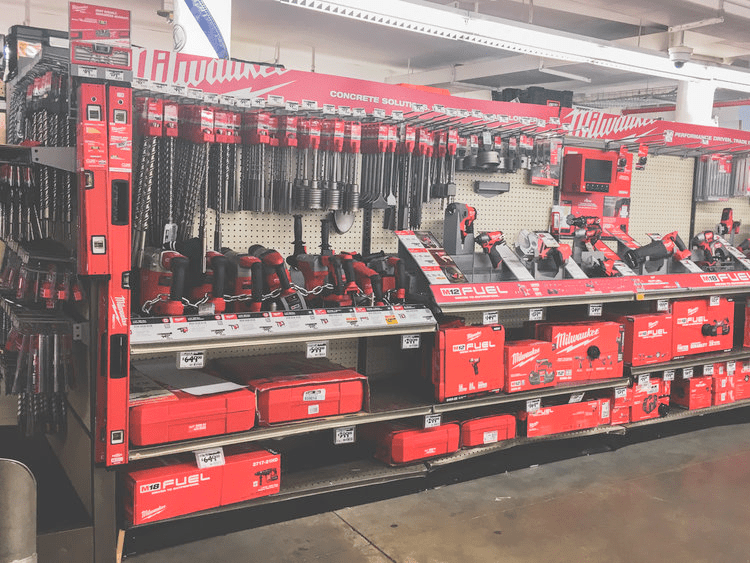
The NJ Tool Show is an annual event that my tool-nut friend and I eagerly anticipate all year. We get to see all the latest innovations in shop tools, from programmable laser cutters that slice with such precision that they can duplicate a business card in 6 point type in a piece of oak veneer to shade tree inventions that seemed to have no practical use at all. It’s tool porn, no doubt about it. At one of the shows, maybe 2001, I ducked outside into the freezing January weather to grab a smoke — a habit I’m glad to…
Well, it’s done.
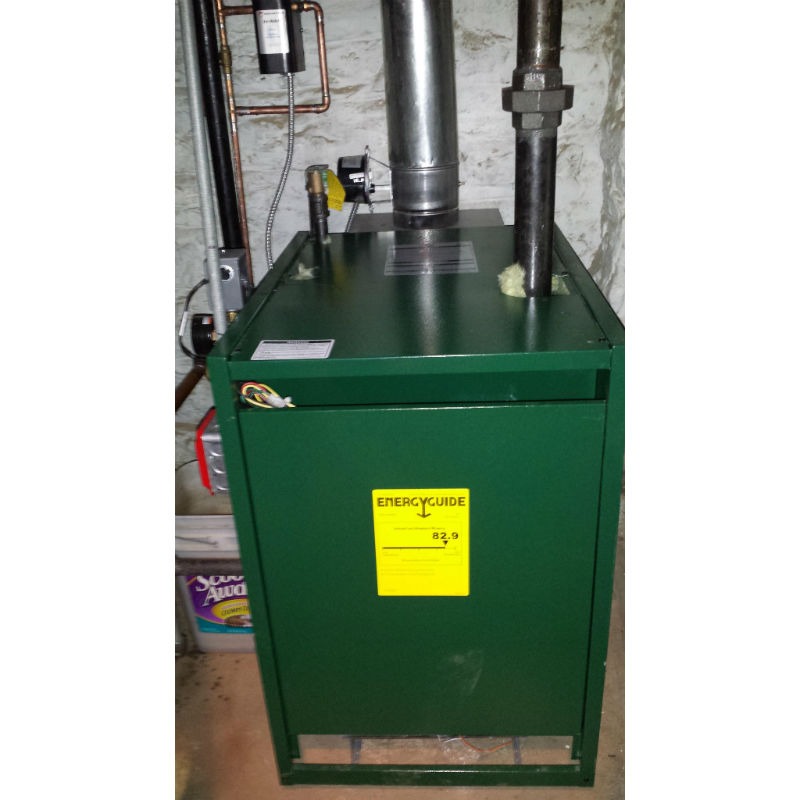
After three years in the making, the boiler epic finally wrapped today. I have a brand new, Williamson 140,000 BTU steam boiler. Granted, it’s not on the epic scale of Lord of the Rings but I think it took even longer to complete it. This story began in 2011 with this tale of woe. I had big plans about extending the house renovation by getting rid of steam heating altogether and replumbing the house for hot water heat instead. It made sense to do this for several reasons. First is that hot water heat is cheaper to run. You’re not…

Next life, I want to be a plumber.
Back in 2011, I wrote an article about my failing Weil-McLain steam boiler entitled Got Three Estimates? Get Three More. The article concluded with my finding a plumbing company willing to rebuild my ancient autofeed mechanism for a fair price. Despite most heating contractors swearing that my 42 year-old boiler wouldn’t survive the season, it made it through 2011, 2012 and the brutal, polar vortex winter of 2013 without a burp. Two weeks ago, I relit the pilot light on boiler. The outside temps were in the 60s so I didn’t turn on the boiler. A few days later I…

Things could be worse. You could be this guy.
Just when I thought nothing could top this Construction From Hell story there’s a new contender. The moral to both stories is be there when the contractors arrive. $680,000 home built on wrong lot in Flagler County FLAGLER COUNTY — A couple from Missouri is waiting for answers after their $680,000 dream home was built on the wrong lot in Flagler County. The home is in a gated community in the Ocean Hammock subdivision, accessible from the air or beach. According to planning and zoning papers obtained by News 13, the home belongs to Mark and Brenda Voss and was built…
Forward to the Past
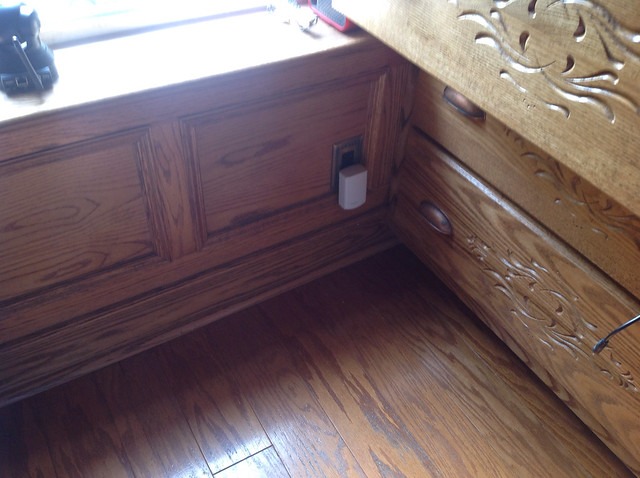
My very first DIY project at Brooklyn Row House was wiring the place for CAT5 ethernet. I decided to do this even before I had an inkling of what I intended to do with the place, or even where my office, bedroom and computers would eventually be located. In retrospect, if I’d guessed back then I would have been dead wrong. Streaming media was still pretty much of a pipe dream in 1999 but I knew it was coming Real Soon and I wanted to be ready for it. I needed a wire soffit between the three floors for cables…
What will $11 mil get me in Brooklyn?
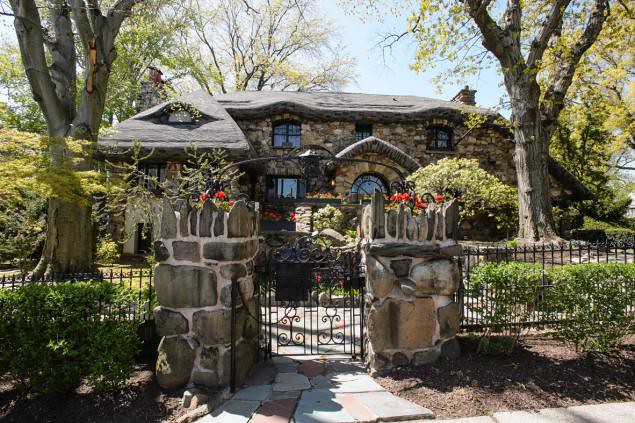
It’s a question that probably doesn’t get asked very often, but here’s an answer ready for it: the locally revered landmark “Gingerbread House” at 8820 Narrows Avenue in Bay Ridge, about a mile south of Brooklyn Row House. Not for nothing but this is a bargain compared to the unanswered 2009 asking price of $12 million. Nevertheless, it’s quite a bit more than the “under $1 milliion” that the current owners paid for it in 1985, which should give an indication of property valuations in this neck of Brooklyn over the past 20 years. https://www.nydailynews.com/life-style/real-estate/piece-brooklyn-storybook-bay-ridge-home-article-1.1333611 The house was built in…

Guess what I found hibernating under my kitchen extension?
I’ve posted a few articles about Brooklyn wildlife here over the years. Now I apparently have one of them as a roomate. Last week I broke a tile on my bathroom vanity and decided that today was a good day to fix it. I keep my spare tiles in a barely heated shed under my kitchen extension. As soon as I opened the door to the shed and the gamey smell hit my nose I knew that something wild was living in there. I assumed it was a feral cat or two until I saw a bunch of straw nesting…

Extreme Renovations
If you’re one of those homeowners who looks disapprovingly at renovations which destroy the period character of the building, you’re gonna need a defebrilator after reading this story. https://www.telegraph.co.uk/news/worldnews/europe/france/9724800/18th-century-French-chateau-bulldozed-by-mistake.html 18th-century French chateau razed ‘by mistake’ by builders while owner was away PARIS — Residents of a sleepy French village in Bordeaux have been left dumbfounded after discovering their local 18th-century chateau was completely bulldozed “by mistake.” The mayor’s office in Yvrac said Wednesday that workers who were hired to renovate the grand 13,000-square-meter (140,000-square-foot) manor and raze a small building on the same estate in southwest France mixed them up.…

Hacker’s Guide to Wireless Audio
Okay, it’s not really a guide because it’s peculiar to my hardware and I don’t completely comprehend why it’s working and I took a lot of wrong turns to get here. But it works! Here’s some background: I work from home and I like to have music playing in the background downstairs, not in my office. For some reason, it takes the edge off the cabin fever having music playing in another room rather than blasting in my face. At first I did this by tuning in an FM radio station on my receiver in the living room. Later, I…

From the Brooklyn Row House mail sack
I received an email today from a producer of a new home show looking for volunteers with a troublesome room in their house that they want renovated… for free! A prerequisite is that you must own your place and be within 35 miles of NYC. You can read the rest in the boilerplate below: Do you (or someone you know) have a bland or boring room? Does it not reflect your personality or style? Does it fill you with shame? We’re looking for unique and interesting homeowners, who have a boring room they’d like to see transformed. Right now a…

Bay Ridge to get our own Jersey Shore reality show. Lucky us.
If you ask anyone on the streets of Bay Ridge about Oxygen Network’s upcoming Brooklyn 11223 reality show you’ll get a blank stare. Nobody’s heard of it. While it’s been filming around Bay Ridge since last September, there have been a lot of Hollywood crews around here lately, from the TV shows Pan Am, Blue Bloods and Law & Order SVU to feature films like What Happens in Vegas, White Irish Drinkers and Cop Out. It was easy for it to get lost in the crowd of bigger budget productions. But when you tell those folks what the show is…

My 15ms Of Fame
At the end of August last year, there were reports of the Google Street Views car being seen around the neighborhood. For the half dozen or so people on the planet who don’t know what Street View is, it’s a terrific value-added feature that the Google Maps folks created by photographing many if not most of the primary and secondary streets around the world. Using Street View you can not only see a satellite view of your location but actual cached photos. It’s also rather hard to miss the Google car as it’s about as subtle as a Oscar Meyer…

Got three estimates? Get three more.
A couple of weeks ago, I did my annual pre-heating season ritual of flushing my 42 year-old Weil-McLain steam boiler in preparation for the ceremonial relighting of the pilot light. I learned later from a plumber that you shouldn’t flush a cold boiler because the fresh incoming water will leave chemical deposits. It was academic however because the boiler was drained dry. WTF? The low water cutoff (LWCO) or autofeed should have replenished the boiler with fresh water even with the boiler shut off. It didn’t. The LWCO looks like some sort of WW2-era cartoon bomb device. It hadn’t been…
DIY For the Masses
The #1 question I get asked on this blog is “What’s your #1 piece of advice for a novice DIYer?” I sort of hate that question because every situation is unique. Is it “prime before you paint?” Or “measure twice, cut once?” Or “dull blades are dangerous?” Or “make certain the breaker is really off?” Fact is, you’ll find lots of sites with lots of Top Ten lists for do-it-yourselfers. Just read the first thing on the list, I guess. My answer is usually to reject the question. Or maybe it should be, “If you think that a #1 piece of…
Primer Failure
I know it’s been six months since my last update here but there hasn’t been much DIY stuff to blog about at Brooklyn Row House… not even something worthy of a Facebook status. Fact is, most of the work here is done but now I’m facing Phase 2 — maintaining all the new stuff which has begun to show the wear and tear of the years and the many boisterous animals. For that reason I think I’m going to jog this blog into slightly different direction, beginning with this post. Three years ago, I had the back of my house…

Netflix + Roku = HBO Killer?
I’ve been very happy with DirecTV’s service here but the monthly bill is like a car loan. Or at least mine is thanks to my soup-to-nuts Platinum HD DVR package. Over the past year I’ve been on a mission to trim the monthly nut. Quitting tobacco products in May 2009 was a great start. So was dumping my $119/month aDSL service with Speakeasy.net in December, moving this server to Panix.com and installing Roadrunner at home. Okay, I didn’t really save anything with that but I got a lot more bang for the buck. Next on the plate was my crippling…
DOT sidewalk inspection scam?
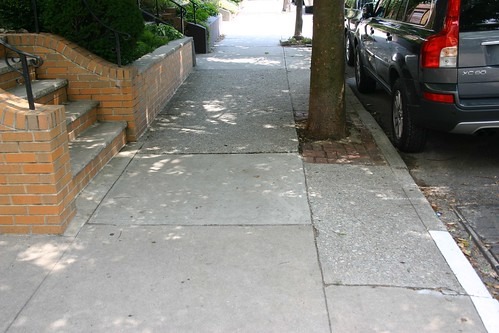
My doorbell rang this afternoon. It was my cheerful postman, Kevin, and he had a certified letter for me. Certified letters are almost always buzzkillers. The envelope said it was from NYC Dept of Transportation so I knew it wasn’t congratulations from Publishers Clearinghouse. Kevin said that every house on the block, except one, got certified letters from DOT. What the hell, I’ve got nothing to be concerned about. My sidewalk and curb are in excellent condition. I signed for the letter and opened it up. Inside was a Notice of Violation that my sidewalk had been inspected and was…
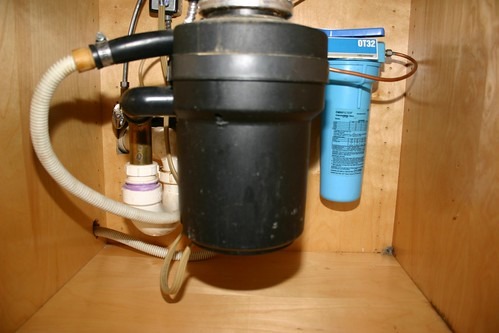
Doesn’t it always work like this?
Sunday morning, a neighbor down the block called the fire department for what was apparently a minor fire. I saw FDNY parked down the street as I returned from walking the dogs. One of the firefighters was flushing out the hydrant as another rolled up the hose. They weren’t there long. The water pipes in the street here are very old and they also supply those hydrants. Whenever one of those hydrants gets flushed the houses on the block get brown water for hours afterward. I don’t mean rusty looking water. There are literally flakes of rust and (for lack…

Insteon, Apple style
Since moving to this house, I had gone from running one 24/7 computer server to three — actually four if you consider a hibernating laptop. The web site you’re looking at right now ran on one of them — a FreeBSD Unix server. A Windows box ran my home automation set up. The other computer, running Ubuntu Linux, was mostly work related. Thing is, the juice needed to run these servers and the related hardware was killing me, including the air conditioning needed to counteract the heat they produced in my small office. The three computers together drew about 700…
Some DIYer I turned out to be
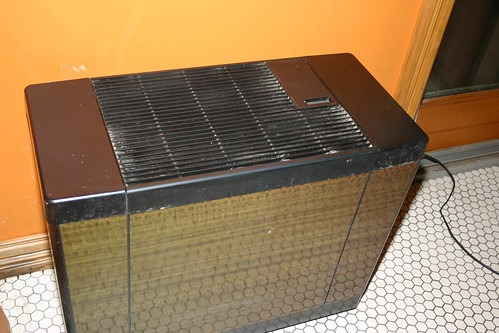
During the heating season — from late October until April — I run a large humidifier 24/7. It’s something I’ve done since music school. I had a 115 year-old Czech flat-back double bass that didn’t like steam heat. By the time spring arrived I would have spent anywhere from $300 to $1000 at the luthier getting glue joints fixed, new cracks repaired, the sound post reset and so forth. Running a big honkin’ humidifier was a lot cheaper and the bonus was learning that it was healthier for people too. The humidifier, a six gallon Bemis, is located in the…

The High Price for Cheap Rent
On a nearby street, a line of ugly, cheaply built, 1980s-vintage row houses stand on a plot of land where there was once a neglected old Victorian. The six houses share a communal front “yard” — a quarter-acre concrete pad that gives the place all the charm of a New Jersey strip mall. To complete that grim visual, cars are illegally parked on it, usually double wide, often obstructing the sidewalk. In fact, there are more cars than one would expect from six single-family homes. A couple of months ago, I deduced why that was when I saw a small…

Most Bizarre Use of a Shop Award
There’s no way I don’t get nominated this year. As prologue, let’s step into the WayBack Machine and bump the dial back to early June, when I casually mentioned to Doc Karen that I had seen several feral cats on my evening dog walks. In addition to being an MD, Karen is also a NYS licensed wildlife rescuer so I should have known that I was shaking a hornets’ nest. A week later, over my fourth or fifth margarita, I found that I had agreed to allow my shop to be used as a holding facility for the Great Owls…

The Tormek Blade Sharpening System
Shop owners love to brag about the incredible tool buys they’ve made on eBay, at flea markets and at estate auctions. Like my $50 Hitachi framing nailer and $125 radial arm saw. But most of us have also made purchases we’re less proud of, like the $100 “miracle corner clamping system” I bought at a tool show which turned out to be utterly useless for anything besides building the tiny box the salesman demonstrated at the show. Naturally, we don’t talk much about those overpriced white elephants, which is probably why these hucksters are still in business. Then there are…
Building stairs the EZ way
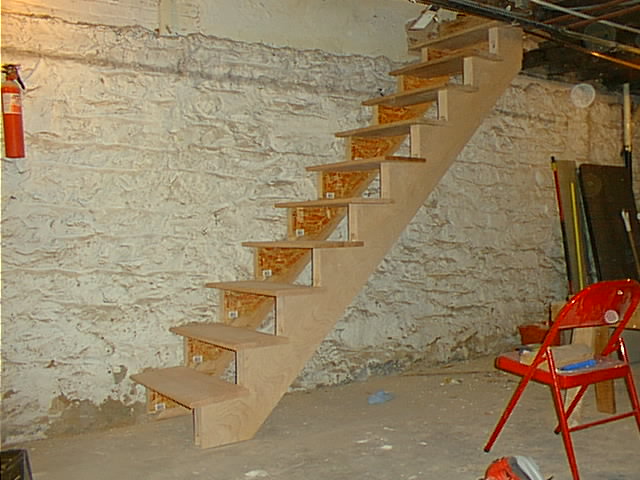
Shortly after I took possession of my house, I was cleaning up the cellar one afternoon when I noticed my cat, Chopper, engrossed with something halfway up the old cellar stairs. I checked to see if he might have a moth and instead saw a pile of paint chips and wood fibers below the stringer he was pawing at. With the paint removed, I saw hundreds of white wormy looking things. Termites! How did this happen? I’d closed on the house nine months earlier. My inspector found some evidence of an old termite infestation and, to be safe, my lawyer…

Beware the Sucker Holes
No, that’s not a pornographic double entendre. “Sucker hole” is a term I learned from an old flight instructor. It’s a break in the clouds which beckons naive, non-instrument rated pilots to take a chance on finding clear skies through that hole only to have the clouds close in on them and leave them in zero visibility. Last week I said I’d post my progress with the new Insteon home automation device, the ISY99-i. Lemme digress for a second. Say what you will about marketing droids, but when a company goes to the trouble of holding a brain jam to…

My house “blue screened”
I had my first Insteon home automation device failure this week. Unfortunately, it happened to the brains of the “automation” part — the software/hardware combination that executes the timers that turn the lights on and off. Specifically, the culprit was the PowerLinc device that bridges my house to the USB port on my computer which runs the timers. Here’s the little sucker. At 70 bucks, it’s not like changing a lightbulb. Okay, I was pissed about it, especially as it’s only a little over two years old. But, fact is, I was never happy with this automation set up. For…

Steam Radiator Air Valves 101
As I was just opening my eyes this morning I heard a steady hiss coming from downstairs. Anyone who’s got single pipe steam heat knows the sound, especially early in the morning when the boiler is working hard to warm the house from its overnight setback temperature. That’s the sound of pressure from the steam displacing air inside the pipes. It’s normal. That’s what an air valve on a steam radiator is supposed to do. But if it’s loud enough that you can hear it a floor away, you’ve likely got a problem. It often means the valve is stuck…
More old pictures of my house!
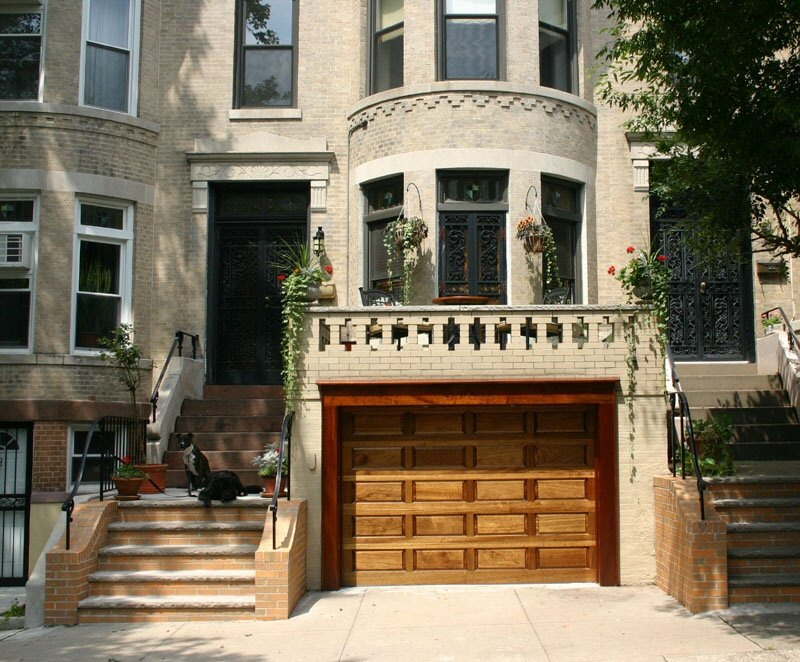
NYC is an old city, at least by US standards, and has a lot of old buildings. My previous dwelling was a loft on lower Broadway in Manhattan, in a converted paper goods factory. It was built in the 1870s and the factory allegedly made cardboard boxes for the military during WW1 and WW2 before going out of business in the mid-1970s. Because there are so many old buildings, people want to see what their residences looked like “back then”. NYC’s Department of Records & Information Services, a/k/a DORIS, has a huge archive of old NYC photos including tax photos…

No Night for Dog Walkers
It’s treacherous out there. After two wet snows since Friday and a day in the upper thirties, the temps crashed after sundown, almost instantly freezing any standing water on the sidewalk and stoops. It’s nights like this that I wish I hadn’t housebroken my dogs so well. They’d sooner cut their own throats than mess in the house. Worse, I can’t even push them out the door to do their business in the back yard. They just sit by the back door looking miserable. It’s also nights like this that I’d like to see public flogging of thoughtless home and…

Man, I love technology!
Karen and I gave each other new T-Mobile G1 wireless phones for Christmas this week. My old (2002) ATT Nokia accidentally drowned when I dropped it in the sink a few days ago. Since I was fed up with ATT’s relentless price gouging and had planned to fire them as my wireless provider anyway it was off to Costco to seal the deal with T-Mobile and this cool phone I’d been reading about. For those who don’t read the techie consumer fan sites like EnGadget.com the G1 is sorta like T-Mobile’s answer to the iPhone but with a major twist.…

Dreaming of a (non)White Christmas
Judging by how prolific they’ve become in recent years a lot of people seem to like white Christmas lights. I know I’m gonna get mail about this. I’m not real big on Christmas. I need to be coaxed (okay, dragged and beaten) into something resembling yuletide spirit. For me, white mini-lights just don’t cut it. They have the holiday charm of a corporate office park or a South Beach mojito bar, and about as much comfort and joy as my 60-watt desk lamp. They don’t say Christmas to me. They say, “Co-op Sales Office: Suite 300”. White Christmas lights tell…

Back from Nantucket
As we do every year, Karen and I packed up the dogs and headed off to Nantucket for Christmas Stroll. It’s a tedious trip involving 6.5 hours of boring driving and 2.5 hours of even more boring sailing. With stops and check-in at the Hyannis Steamship terminal, we generally leave Brooklyn at 8am and arrive at Karen’s house near town in Nantucket around 6pm. Or about the same time it would take to leave NY and check into a hotel in Moscow. If it wasn’t for this annual break from my work schedule, my Christmas spirit would last as long…

Cops and Robbers
So we’re experiencing a sudden crime wave in my peaceful ‘hood. Nobody’s said WHY this is happening but according to The Brooklyn Paper: During a 28-day period starting on Sept. 5, crooks broke into 39 residences in Bay Ridge — an increase of more than 60 percent compared to the same four-week periods in 2007 and 2006, when there were 24 and 21 burglaries respectively. Yikes! But I can’t say I didn’t see this coming. A few months ago, a junkie broke into a house a few blocks from here. Even though the place had central station, it was a…

The Return of Tony Manero
You forty and fifty-somethings will undoubtedly remember the 1977 anthemic film about the disco era, Saturday Night Fever. What you may not know is that it put my neighborhood on the map. “Fever” was about the disco days and the lives of several blue collar kids in Bay Ridge, Brooklyn. I love talking with my neighbors about those days. They say the movie was an accurate depiction of what life was like here, at least for the disco heads. In 1977, I was a hardcore jazz poser at Berklee College of Music in Boston so I missed it all, geographically,…

The Death of the CFL
I’m really getting fed up with the false lifetime claims of Compact Fluorescent Lighting manufacturers. On average, I’ve been seeing these bulbs fail at half their published life spans. Maybe we need a class action suit to force companies to publish the MTBF (Mean Time Between Failure) hours for these bulbs in the real world. The issue isn’t with fluorescent technology. In my last home, an industrial loft that was previously a paper bag factory, I took possession of two dozen large fluorescent ceiling fixtures. I could tell from the dust on those bulbs that they were already years old.…
I found my original C of O!
NYC didn’t start requiring habitable buildings to have a Certificate of Occupancy (CO) until 1938. Since my house was built in 1906… actually the city recently re-evaluated its records and moved this back to 1901 so I guess I’ve gotta change my banner here… it was very possible it didn’t have a CO. Even though NYC law requires either a valid CO certificate or a “Letter of No Objection” from the Dept of Buildings to be submitted at closing, I never saw one. A housing court judge was quoted as saying, “it is more likely that you will see a…

So how DO you sell a home in this environment?
Especially an expensive luxury condo that hasn’t been built yet? Especially when it’s NYC and the building isn’t located in Manhattan or fashionable downtown Brooklyn? Especially when the land under it used to be one of the most polluted areas in the city? The media’s fascination with Sarah Palin continues. My friend saw this from the ferry a couple of days ago. It’s a new building being constructed in Williamsburg, Brooklyn. Developer Jeff Levine of Douglaston Development Corp. hung a seven-story banner from a tower under construction in Brooklyn’s Williamsburg area before the Vice Presidential debate. The idea was by…

NYC’s Most Expensive House
I don’t know which is more remarkable: the price tag or the appreciation. The 18,500-square-foot, 103-year-old Henry T. Sloane Mansion at 18 East 68th Street just went on sale for $64 million, the most expensive officially listed house ever in New York. I thought that rocker, Lenny Kravitz, had set the unbeatable bar a couple of years ago when he paid a reported $40 million for the Duke-Semans mansion on Fifth Avenue. But since then there have been several townhouse sales in the $50 mil range. Not surprisingly, many of them are owned by weasels financiers, probably paid for by…

Synchronicity, flashbacks and old photos
Yesterday was one of those strange “theme” days we all experience from time to time. It began with my neighbor, Betsy, and me taking a trip to an art store on 3rd Ave to get some old Brooklyn photos framed that I’d collected over the past year. The centerpiece was something I’d bought from shorpy.com, which I’d discovered on the recommendation of a forum regular on Old House Web. It’s a shot of a freezing cold, February day in Brooklyn Heights circa 1908 with the Manhattan Bridge under construction in the distance. The detail on the photo was mesmerizing (click…
In 5 years I’ll make another plan
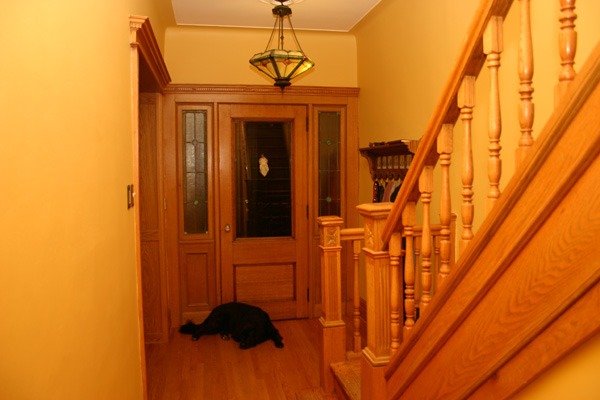
Want to know how out of shape you are? Paint your house. Between squatting down to cut in baseboards and torquing your body into dramatic poses while standing at the top of a ladder with a roller, you’ll find out. Do it for several days and you’ll have lactic acid boiling in muscles you didn’t even know you had. The colors here are a little off because of the flash but, believe me, it looks nice. Because of my job I had to break the painting marathon of my mudroom, first floor hall, stairway and second floor hall into several…

The view from BrooklynRowHouse HQ tonight
I shot the above from my office window a few minutes ago. Tomorrow, of course, is the seventh anniversary of the Sept 11 attacks. Seven years ago tonight, I saw two tall, bright buildings standing there. They were my night light. Tomorrow, the TV will be full of somber ceremonies and remembrances of the 2,998 people killed and the 6,291 injured by sick fanatics. Barack Obama and John McCain are both scheduled to be here for the ceremonies. Flag pins will be worn, anthems will be sung and much patriotic hay will be made. It will continue over the next…
Construction Gibberish
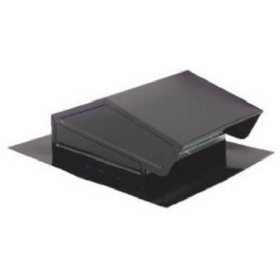
It’s not complicated enough that a novice DIYer has to learn the skills, tools, techniques and best practices for what is otherwise a simple job in the hands of the All Knowing. He also has to learn the Babylonian nomenclature for the stuff he needs to do it. For instance, last year I was derailed for two days trying to find the name for a particular type of moulding I needed for the wainscot in my master bedroom renovation. old roof cap I had the same problem trying to find the rooftop vent “thingie” for my bathroom fan. The not-too-bright…
“Wow, I’ve always wanted to renovate an old house!”
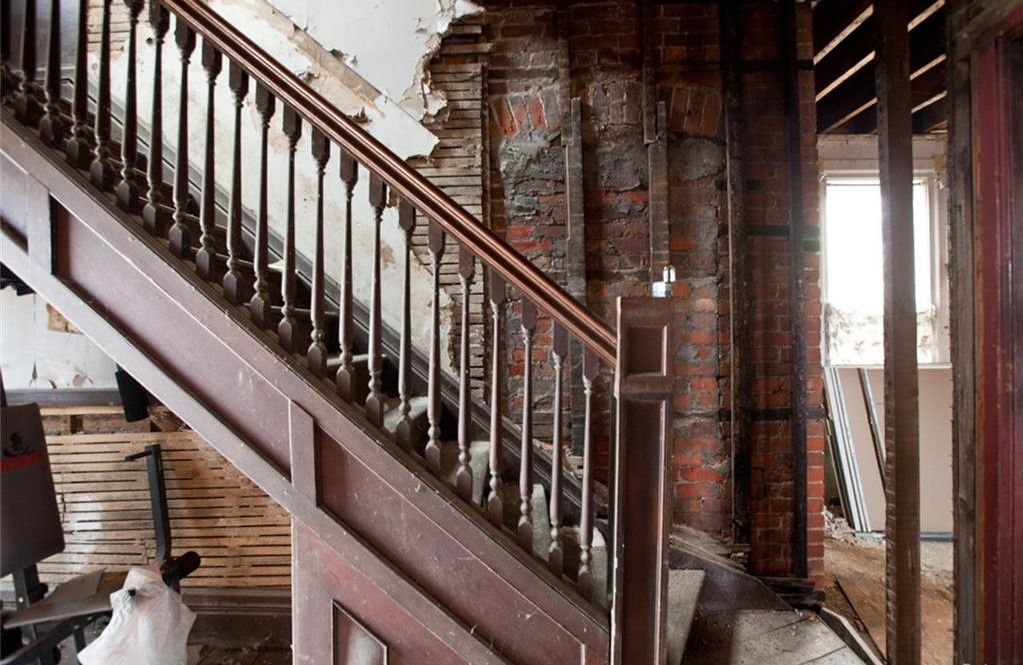
The popularity of home improvement shows demonstrates that people are fascinated by the idea of taking something old and beat up and making it new again. But as anyone who has undertaken a large scale home renovation knows, the reality of doing it yourself lives on another planet from the romantic, everything-works-the-first-time impression that these shows portray. For one, you won’t have a professional contractor standing out of the shot, ready to yell “Stop! Stop!!” before you slice through a BX cable with your demolition saw. Nor will you have a bunch of off-camera laborers to unload the truck, clean…
Ready for paint? I wish.
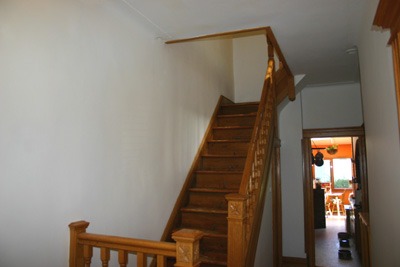
I’m gonna change the name of this blog to something more relevant, like Life Sucks And Then You Renovate. My apologies to anyone who might currently be using that name. I feel your pain. It was supposed to be an easy, brain-dead job: just slap up some primer and paint over walls that had already been skim-coated and prepped several years ago. But I quickly got derailed and had to spend a couple of evenings last week dealing with this. That wasn’t in the plan, however it’s an old house so, you know, what else is new? But it gets…

“Moonstruck” house sold
I confess that I like an occasional chick flick and the 1987 Cher/Nicholas Cage flick, “Moonstruck”, was always one of my favorites. It was mostly because director Norman Jewison captured so well the feel of a Brooklyn townhouse and a Brooklyn townhouse neighborhood. This is largely because Jewison shot the movie on location in a real house and in a real neighborhood. There was a scene in the movie when Olympia Dukakis, as Rose Castorini, stands outside the home with her wannabe male suitor. He looks at the house and comments, “My God, it’s a mansion!” “It’s a house!” she…
Huh? What happened?
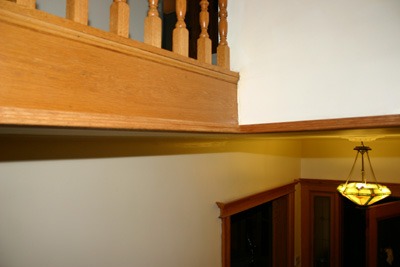
It started as an easy breezy project — an (almost) laborless Labor Day. Seven years ago, I scrubbed, scraped, skimcoated and primed the first and second floor hallways. Last year, I did a little more scraping and added another coat of primer. So why have these walls not been painted since I moved in nine years ago? Call it Home Stretch Complacency, Last Lap Crash, whatever. I just never got around to deciding on a color. Primer white was fine for now. This weekend my intent was to deal with this, or at least add another coat of primer. I…

This would make an awesome train set.
My older brother was a model train buff. I always liked the real thing. As a little kid growing up in Japan, my friends and I used to sneak across the mulberry fields and sit by the train tracks to Yokohama. But the local koban police usually caught us and hauled us back home with a stern warning to our parents never to allow it again. That never deterred us. No question about it, we were American brats. Bay Ridge is in south Brooklyn, on lower New York Harbor. One the benefits of living here is dozing off to fog…

She Talked. This Happened.
Next up in my “Meet The Neighbors” series is one of the largest buildings in NYC, the Brooklyn Army Terminal. It’s not large in vertical terms but as far as the footprint goes, there are few NYC buildings to match it. BAT is located four blocks north of me. Surprisingly, for a complex of its imposing size few people around here know much about it. About the only information I could glean from the locals was, “The Army used to own it. It’s something else now.” With its Pentagon-like utilitarian bulk, the closed-to-the-public perimeter security, the NYPD K-9 facility on…

Can This Be This?
This past Saturday I went pedaling around the neighborhood with my digital camera. I’ve been wanting to do a series of articles about the neighborhood so I needed to stock up on bad pictures. I’m from the Grateful Dead jam school of photography: just keep snapping crap and sooner or later you’ll stumble on something almost interesting. I live just south of one of NYC’s oldest and most dilapidated industrial sprawls, on the western edge of an area called Sunset Park. I know, the name sounds like sipping Mai Tais on the veranda while watching the ocean swallow up the…

Central vacs are awesome.
I resisted the urge to title this article something stupid like, “This really sucks”. I’m often asked what’s my favorite power tool in the house. It’s not my Delta table saw nor my router table. It’s my central vacuum. In terms of pure usefulness, my central vac has done more work on the house and saved me more time here than even my cordless drills. And without a single breakdown. I remember when my gadget freak of an uncle installed one in his home when I was a little kid. I was always fascinated by it. I pestered my folks…

Have you tried acoustic tile? (Hint: not a solution!)
After the 500th time reading someone complain about the clomping feet of the tenants upstairs, and the 1000th response from a helpful someone advising them to install acoustic tile, I have to post something that will maybe get Googled for the next poor person who asks about it: acoustic tile is not a solution. I don’t have an architectural acoustics degree but this is something I learned in the trenches, building commercial recording studios and reading books by studio designers and acousticians like Michael Rettinger and Don Davis. There are two basic types of noise control: one that alters the…

Farewell, Chopper
I found Chopper as a 9 week old kitten. It was almost a set up for a bad joke: “A cat walks into a bar…” but that’s how it went. During our Tuesday night motorcycle hang at the Ear Inn on Spring Street in Manhattan, an orange kitten bravely walked in the door and started begging food from the patrons. I picked him up and he started licking my face like a golden retriever. What a personality. I adopted him on the spot and took him home to my other two foundlings. Even though Chopper was just a tiny little…
Street Repaving, Brooklyn-style
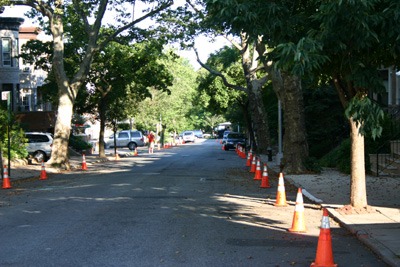
Last year, NYC DOT repaved several Brooklyn avenues. Last month, they began ripping up some cross streets, mine included. Even though my street was in good condition, people who have lived on the block for 40 years can’t remember the last it was repaved. I figured this might make a good photo archive moment for my planned neighborhood blog. When I saw the yellow signs pop up all over the street I thought it was going to be yet another annoying film shoot. Over the past couple of years Brooklyn has gotten to be a hot location with Hollywood. You…
“George is gettin’ frustrated…!”
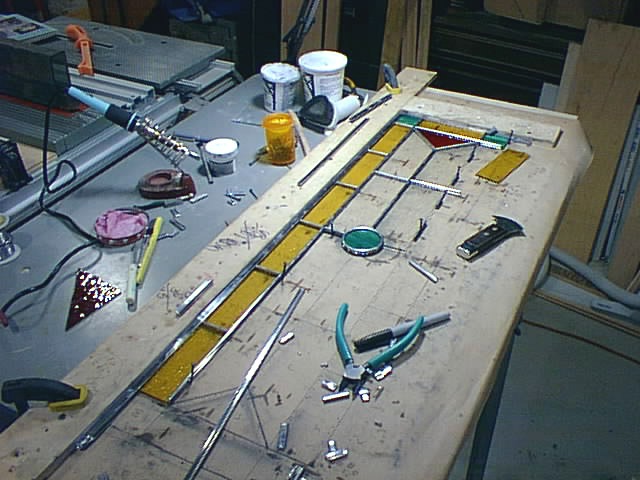
The saga continues on the stained glass design for the master bedroom bureau. I created two more designs (below) that look nice but seem inappropriate for this piece. I’m beginning to think that stained glass in general is too heavy for this cabinet. I considered using cane instead except my cat would make short work of that. Trixie hops up on the window sill, opens the sock drawer and sleeps in there. Giving her a climbing wall would be a mistake. Then I remembered something I’ve seen in old movies: wire glass. You see it a lot in Hollywood set…

Returning to the stained glass saga…
Let’s see. I finished painting the back wall, the tomatoes are flourishing, I lost 20 pounds… I’ve managed to exhaust all my excuses for not starting another project. Rather, I’m returning to a project I said I was going to have done by now. This marathon stained glass project breaks down to six sub-projects, or milestones in TechnoSpeak: Two door panels for the master BR bureau Two window panels for the master BR hallway window Two upper door panels for the LR home entertainment unit Skylight over the staircase Bathroom skylight Three sealed light boxes for the back yard fence.…
Hey, boss, it was in da plan!
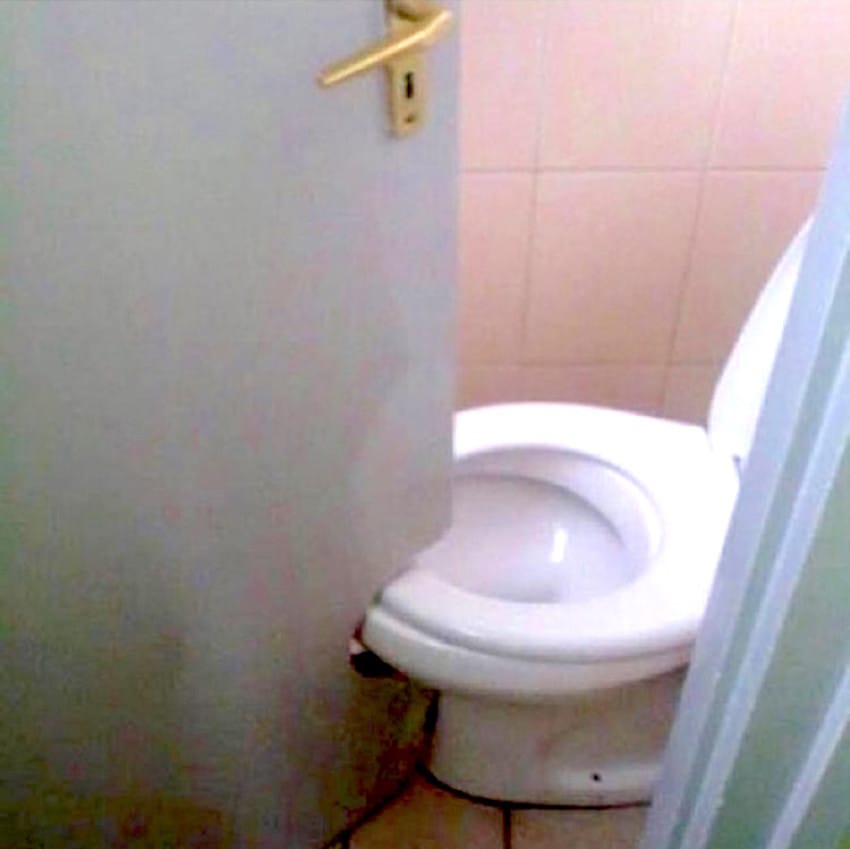
I was walking the dogs down an unfamiliar street this morning when I saw four old row houses, obviously constructed by the same builder. What caught my eye were the wrought iron doors under the front stoop, accessible by three steps down. One of the doors was open so I could see that the stairs continued down to the basement level. Nothing interesting there except that the doors are only about 30 inches high. Is it possible the architect specified a 30″ door and this is what the builder gave him? I’ve been collecting these shots for a while for…

Hurry up, Maters!
The rule-of-thumb is that tomato plants double in size every ten to fourteen days. With the sun, torrential rains and warm evenings we’ve had here in Brooklyn, plus my magic elixir of Miracle Gro, epson salts and fish emulsion, these plants made the mark. This year, I’m growing mostly heirloom varieties with bizarre names like “Mortgage Lifter” and “Black Zebra”. The grower I got them through wrote some appetizing prose about each variety but kinda missed on the specifics. For instance, I didn’t know if I was planting any cherry tomatoes until the first fruit appeared and I deduced that…

The Secret to Home Renovation: Telecommuting
I was chatting with a neighbor yesterday, consoling him for the lack of progress he complains he’s made with his house. He discovered my blog last month and couldn’t understand how I got so much done with my house, especially insofar as he’s lived here almost as long as me. He assumed it had to be my prior construction experience, my shop and the fact that I didn’t have kids. All are true, especially the kids part. I’ve only got two dogs and I know how much free time they consume every day: an hour at the dog run in…

Odds and Ends, Excuses and Alibis
By now, I was supposed to have posted about the successful completion of my stained glass construction projects. Maybe because I was coming off that year-long second floor renovation I needed time to recharge before throwing myself into another marathon. Instead, I got obssessed with maintenance, humdrum projects and pontificating on the Old House Web forums. First up: the garden, or more specifically my nine hybrid tomato plants. I’ve had diminishing returns from my ‘maters the past couple of years. Last year, half the plants died shortly after flowering. So I decided to consult with the masters: the greybeard Italian…

The correct answer is: a boombox
I’m not saying anything that battle-experienced home renovators don’t know. Sometimes, the simplest little task can consume gobs of time and a bucket of money before you realize you made a tragic mistake. Not always, of course. That’s how you get suckered into doing it over and over again. It started as a simple idea: I wanted to have music in my back yard. I could have bought a portable boombox for a hundred bucks and kept it under the deck. Problem solved and, when all is said and done, that actually would have been a more flexible solution than…

Up The Wankers, Amanda.
Amanda Green passed away at 2am this morning from pancreatic cancer. She was only 49. I moved to Brooklyn from Manhattan in 1999. In large part, Amanda is the reason I’m here. What more or less brought me to Brooklyn, and what taught me that Brooklyn isn’t “Injun territory”, as so many Manhattanites believe the boros to be, is a Brooklyn Heights restaurant I became a part of in 1993 called La Bouillabaisse. I met Amanda in 1990 at a small birthday party for me at the Oyster Bar. She was a friend of my sister’s and was living in…
Got a shop? You need this stuff!
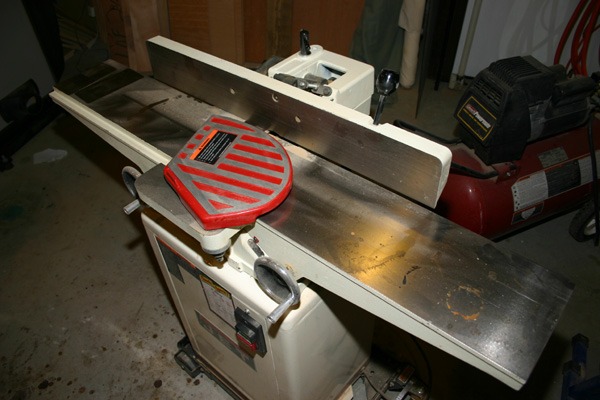
Last weekend, my boss and I made the trek to the annual NJ Woodworking Show. Jeb has a pretty nice woodworking shop but his passion is car and motorcycle restoration. He’s done several old bikes — Velocettes and Moto Guzzis — but his current project is a 1955 Land Rover. The Rover looked like it had been parked at the bottom of a river for the last fifty years but after two years he’s nearing paint and finish, which means he needed supplies, which means we both needed to hit the show. I’ve been looking for a decent steel tool…

The Greenville Horror
A Google search shows that the house at #6 Whitten Street in Greenville, SC was sold to George C. Leventis on July 8, 2003 for $88,000. Flash forward four years. The home’s new owners are the Browns, who purchased the Whitten Street house for $75,000. Jason and Kerri Brown of Greenville found a secret room in their home behind a bookcase, and what was inside was a nightmare beyond their wildest dreams. “This can’t be happening. This can’t be true. It terrified me,” Kerri Brown told News 4’s Tim Waller. A secret room! Who hasn’t had fantasies of finding a…
Designing Stained Glass
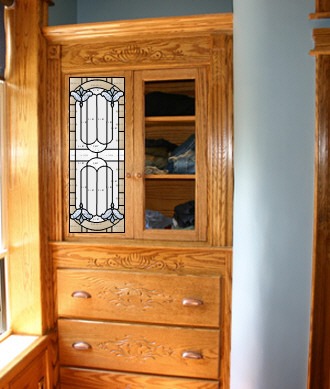
Rembrandt, I ain’t. I can visualize things pretty well but there’s a bridge out somewhere between my left and right brain. With woodworking, I usually wind up head jamming the fabrication. It works 90% of the time. The other 10% is handled by my hard-won skills in making dumb mistakes look like I meant to do that. But this ad hoc process doesn’t work for stained glass construction, where you need to have a completed design and pieces cut before you start soldering things together. My stained glass work to date has been pretty simple, angular and, yes, left brained.…

New Stained Glass Projects (building a face frame)
I have several stained glass tasks in the queue here. Some, like the upper cabinet doors in the living room media cabinet, have been on hold since 2003. Others, like the funky stairway skylight, I’ve wanted to replace since the day I first saw the place. While stained glass construction is fairly mechanical and basically just woodworking joinery using glass and lead came, the design, templating and piecing out can be very time consuming. Most of the glass I’ve done here is fairly simple and angular to match the existing stained glass. But I wanted something a bit more ornamental…

My Fragrant Old House
I’ll be posting a new series of articles on stained glass construction in a few weeks. I purchased some new (expensive!) stained glass design software from Dragonfly, Glass 2000 Professional, to help me complete the half-dozen stained glass projects I’ve got on my plate. So I’ll post a review of that as well. I’m gonna change gears and show a bit of my metrosexual side. I like fragrant houses. I spent my early years living in a small town in Japan, where my mother became a passionate connoisseur of oriental incense. She often had a subtle fragrance burning in the…

Bay Ridge Hum
Out-worlders would probably expect Brooklyn to sound like inner-city traffic, police sirens and “Yo! Vinnie! T’row me down some money fa a’ egg cream!” Actually, it’s pretty quiet down here by the harbor, except for the low-flying NYPD helicopters. And ambulances. And La Guardia jets on approach. And Belt Parkway traffic… Nevertheless, I have two “bizarre noise” stories. I’ll talk about the most public one first and, if I can keep it short, I’ll tell the other one. In late 2005, I was at the dog run when an obviously exhausted woman told me that she was kept awake all…

My Product Review (and probably my last)
The last product I was asked to review was an in-floor Kryptonite locking system for motorcycles for Motorcyclist mag. I injured my knee tripping on that #*$% lock in the dark. Let’s see if I have more luck with the EZ Clean paint brush that Jeannie from Houseblogs.net asked me to check out. My project was painting my kitchen extension, which still had seven year-old primer on the walls. It’s one of those Deferred Completion Syndrome items I was happy to check off the list for this product test. I didn’t have a clue what I would be testing other…
Stripping a Door
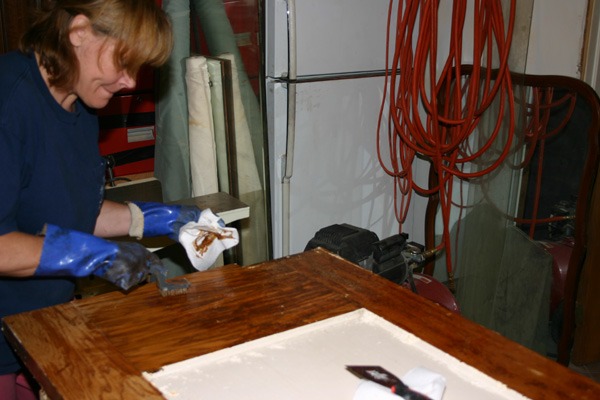
The prologue of this story is an old door that needed to be stripped. I brought in my amateur stripper, Doc Karen, to serve as my photo model for this two part pictorial. Even anesthesiologists have to moonlight to make ends meet these days. I was gratified that she took our tutorial seriously enough to wear her surgical scrubs (mismatched as they were). Karen’s own house is full of painted architectural woodwork so she wanted to learn how the paint stripping process worked. Since it’s her door now I was only too happy to hand her the tools and take…

Saving The World: Black Pixels and Termite Farts
Tomorrow, Oct 15, is Blog Action Day and tens of thousands of bloggers like me have each committed to writing an article about the environment. BrooklynRowHouse is about old home renovation and improvement so this topic is a low, slow ball over the plate for people like me. Do you like how I worked in a baseball metaphor during playoff season? This will be a long article and I need to use whatever cheap literary devices I can to hold your interest because there are thousands of bloggers out there who write better than me and we’re all writing about…

Cheap digs
Jeannie from Houseblogs.net challenged us blogger monkeys to write a show-and-tell post. Considering the probably millions of bucks that we housebloggers collectively squander annually on new roofs, new additions, central air and glass door knobs, if there was a ever a low, slow ball over the plate for this group, this was it! Bragging about my tool collection was the first thing that popped into my head. but I just got off a nine-month bedroom reno project and I’m tired of talking about tools. I wish I could boast about my auction and flea market finds but I’ve been pretty…
A Prodigal Door Returns
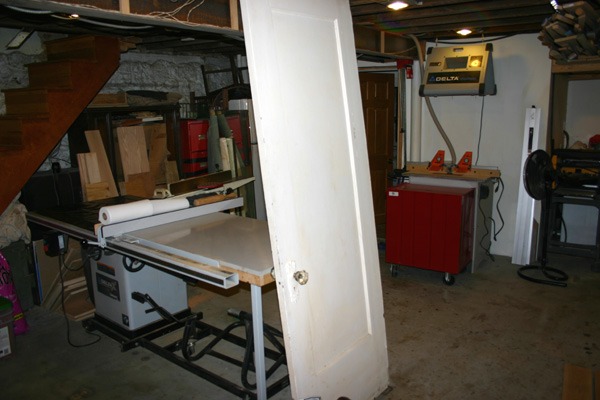
Okay, it’s a lightweight job and it’s not even for my house. But after several months of heads-down work on a software task for my client, The Children’s Health Fund, I’ve got another DIY project. Maybe it will kick me back into gear to finish the cabinet doors and stained glass projects that have been dogging me all summmer. Well, some of it for a lot longer than that. The job is stripping an old interior door and replacing its center panel with some sort of a screen. Karen is a licensed wildlife rescuer and needs this door so her…
My toughest cabinet
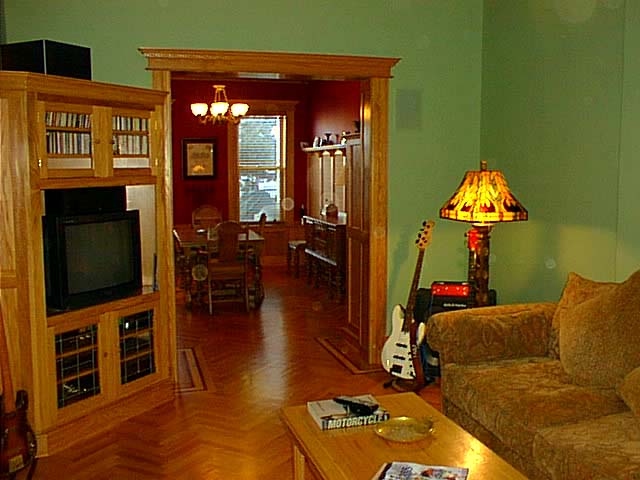
My dogs are killing my floors! They’re large and energetic pups who like to use the floor as a skating rink. I decided to look in my photo archives to see what they look like now as opposed to five years ago. Thankfully, it wasn’t as bad as I thought but I’ll probably get the floors lightly sanded and refinished when I’m done with the construction here and the dogs are a little older and more sedate. One of the reasons I don’t stain floors is so I have the option to screen them if they need refinishing rather than…
A Tree Blows Down in Brooklyn
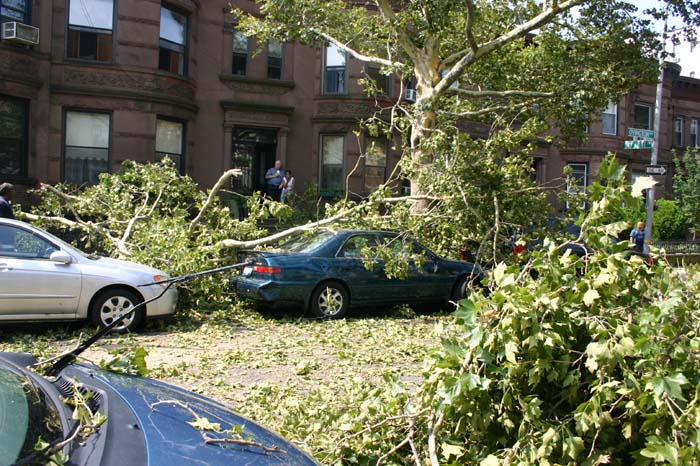
About 5:30am this morning I was suddenly awake. I’m not sure if it was the threatening thunder approaching from the northwest or my shivering, hundred-pound Newfoundland desperately trying to crawl under the covers with me. Outside, it was like War of the Worlds. Lightning was flashing like a paparazzi frenzy and the thunder was getting progressively angrier. I heard the rain starting. Within minutes it was coming down in buckets. Seriously, that’s what it sounded like: someone dropping buckets on my roof. By now, most of you have probably heard that Brooklyn experienced its first tornado since the 19th century…

Robot, robot
There was a song by a Chicago band called The Flock that I used to love during my trippy teen days: Robot, robot arms and legs Teeth, bones, hair, its all there Robot, robot arms and legs Battery’s dead, head’s dead. (Mechanical man, mechanical man!) Whenever I muck with my home automation hardware this song plays over and over again in my head. It’s pretty maddening. Sitting on my dining room table since last Thanksgiving was a small pile of boxes containing Insteon controllers, in-wall dimmers, relays and the like that have been waiting patiently for me to complete the…

A Case of the Mightaswells
If you own home in progress, whether you’re a DIYer or someone who calls a contractor to change the lightbulbs, you know the syndrome. “As long as I’m updating the kitchen, I might as well make it larger.” “As long as I’m pouring a new basement floor, I might as well replace all the old plumbing underneath. And then I might as well rough out for another full bath. Then I might as well build it.” “As long as I’m opening up the wall, I might as well add a central vacuum system, split-unit air conditioning and a new 50a…
More and more sawdust
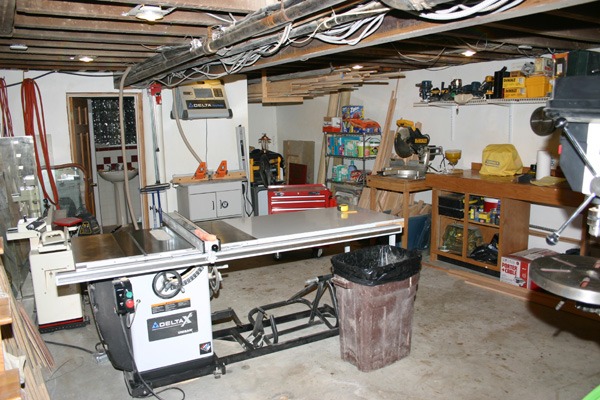
With a challenging software project winding up, the top floor reno winding down and my tools reunited with their friends in the basement, it was time to turn my attention to the crime scene that used to be my shop. This cleaning has to last several months because it will probably be that long before I’ll be using the tools again. I don’t mind working in a messy environment but I can’t start a new project unless everything is neat and tidy, with every tool in its proper place, the table saw waxed, stationary tools aligned, blades sharpened, etc. This…
Time to buy a bed
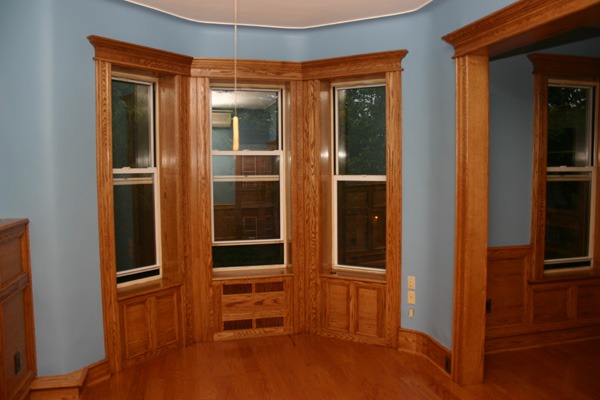
I can’t freakin’ believe it. All my tools are back in the shop where they belong, the paint’s up, the room is clean, the nine-month saga of the master bedroom renovation…. so OVER! Okay, there are still a few things left to do: the cabinet drawers and doors, the hallway stained glass windows, the doorknobs. I’ll get around to it unless Home Stretch Complacency strikes me down. Over the last few weeks I’ve been finishing up the hallway, the two closets and my outside plantings. There’s always a sense of closure when I lay that second coat of paint, especially…

I actually do have house stuff to blog about
After all, it’s been almost two weeks since my last blog post. However, I like to accompany my renovation articles with photos and the bedroom is currently an eyesore while I reorganize closets and get rid of clothes I’ve had since my disco show band days. No way am I posting photos of it now. A fair question would be why I’m reorganizing closets when I haven’t finished the bedroom reno yet. I have a long closet that connects the two bedrooms. That’s where I stuffed everything when I began this project. Now I have to lay a new floor…

At last, that curved baseboard!
I’ve been pushing off this little project for a couple of months. The bedroom renovation began with construction of the closet and the curved plaster corner I absolutely had to have (if for no other reason than I’d never done one before). I knew that was going to create problems with the trim later but, hey, later is later. Six months later, later became today. There are basically four ways to build a curve using solid lumber. One is to steam it and bend it in a jig. Bending 1″ nominal hardwood stock to as shallow a radius as I…
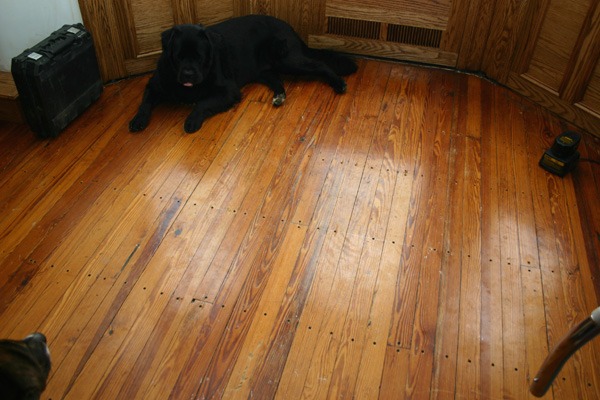
Engineered Flooring HOWTO v2.0
I don’t like drywall. I like plaster. I don’t like composite mouldings. I like hardwood. I don’t even like prefab mouldings. I like to cut my own. So why would I like something as new-fangled and artificial as engineered flooring? Actually, I don’t. Even though I went through bloody hell to lay those herringbone floors in the living room, solid hardwood is still my first choice. But there were reasons why engineered flooring was the better option for the second floor in my house. One is that I didn’t want to add an extra 1.25″ to the height of the…
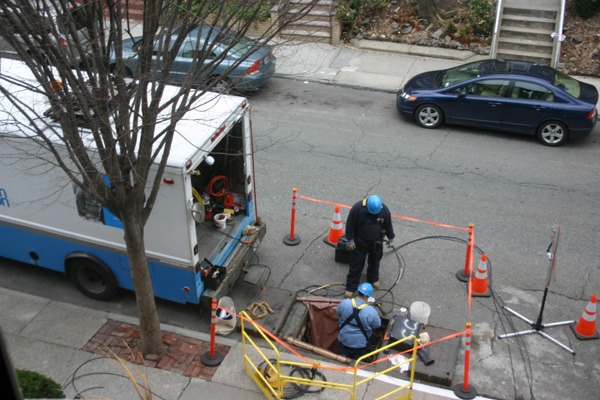
Con Ed resolution
Catching up on the recent fun at BrooklynRowHouse, I’ve finally got my electrical back. My electrician strapped the panel so I didn’t have a half-dark house but I couldn’t run any 220v appliances, including my Delta table saw. That brought the woodworking in the bedroom reno to a dead stop. The stories about the fried feeder line are here and here. I was very concerned that my saw and clothes dryer could be out of commission for months. My neighbor had the same problem and it took Con Ed four months to fix it. That’s why I was surprised that…
Mea Culpa
Forgive me, blog, for I have sinned. It’s been a month since my last confession. I’ve been so busy that I haven’t found the time to sit down and write about what I was up to. I should break this update into a few posts. Lemme talk about the bedroom reno first. After I got derailed by Con Ed’s feeder line burning out and putting my 220v Delta table saw temporarily out of commission, I regrouped and decided to start on the finish work. The remaining trim work is mostly shop stuff so I can do it later. Three days!…

T’weeks
Every so often I just don’t have an appropriate photo from my camera roll for one of these articles. A pic of my desk lamp not working doesn’t really say anything and I can’t take a photo of my burned out feeder cable under the street. So I scrounge. Like now. I was surprised at 8:45am this morning when the Con Ed truck pulled up just as I was walking out the door with the pooches. If you read my last post, I lost one leg of power to my house yesterday. The electrician I called pronounced one of the…

Blackout bummer
No, not another citywide blackout, thank Bob! I’ve lived through two of those and two was enough. I was checking my email today when my computers and monitor suddenly shut down. The music went quiet in the living room downstairs as well. But I could hear the radio playing in the shop downstairs. It took me five seconds to figure out what happened. People a block away probably heard me yell, “NOOOOoooo!!” This has happened to other houses on the block. The underground feeder cables into these houses are old. Add a bunch of melting snow and road salt like…

Brooklyn wildlife
No, I’m not talking about the street scene around here. I mean actual wildlife living in the shadow of downtown Manhattan. Rural folks are surprised to hear that we have something other than rats and pigeons here. But it’s a fact. I was walking Jack and Augie last night around 1am when Augie spotted something in my neighbor’s garden. He charged. I heard a hiss and caught a flash of white fur as something flew up a large bush. A cat? Then I saw the skinny tail and the lethal-looking teeth. It was a possum. I wasn’t that surprised because…

I have an “attic”!
I built and installed the doors for the “attic” over my new closet. This being a row house and all, it’s the closest it will ever come to actually having an attic. These doors were another scrounge job. It’s leftover lumber and red oak plywood from the wainscotting and earlier projects. I’m on a kick now to reduce my lumber scrap bin. I think I did a pretty fair job of matching the pre-fab closet doors below. But I’m really undecided about whether to leave them like this or if it needs some additional trim element to finish them off.…

Aaaand… done!
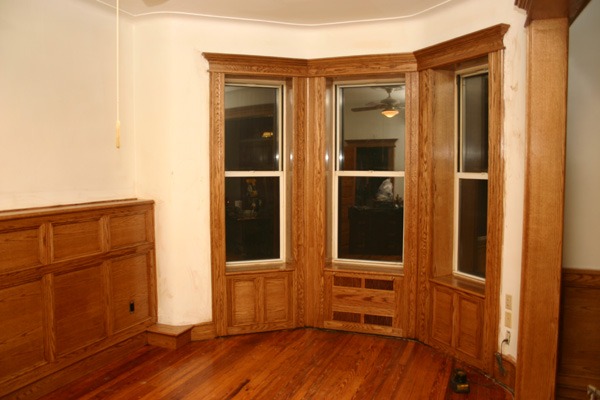
I completed all the woodwork on the bay window unit today. I won’t play conquering hero either. With the weird angles and different depths of the windows, the embedded convection steam radiator, and more than a couple of measure-once goofs, I was very lucky to get through this without a major screwup. This weekend, I completed and installed that removable grill in the center of the windows. This was also a bit of work. There are seven boards and two store-bought but modified red oak grills in that face panel, all of them biscuited together with waterproof glue. I wanted…

Noisy neighbors
After a long day at the terminal, like today, every so often, like tonight, I get the overwhelming urge to head downstairs to the shop, turn on my noisy dust collector and even noisier bench tools and finish off some project, like the radiator grill for the bedroom reno. However, this being a row house on a quiet block that pretty much blacks out by 10:30pm, I’d get lynched. I even turn off my motorcycle engine and coast the wrong way down the street to my garage rather than rouse the neighbors, and I have street legal pipes on my…
Maybe a roof rack?
Not counting the 12 year-old Pontiac wreck I owned for all of four months and on which I managed to put maybe 400 miles before I donated it in disgust to a charity, my 2001 VW Golf is the first car I’ve owned. I’ve been a motorcyclist since I was 18. When I lived in Manhattan, it was all I needed, or wanted. But when I moved to a suburban house with a garage, I had to get four wheels, if only for lumber runs. That’s pretty much all I use it for too. I’ve had the car for six…
Yet another “cool tool” article
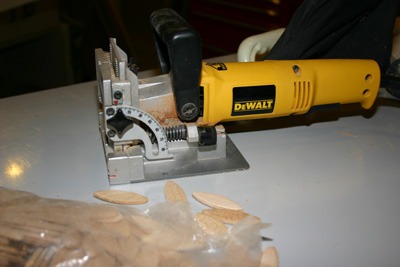
I’ve blathered a lot on the blog about the coolness of routers but another tool I use quite a bit is a biscuit joiner. What’s that? Bread glue? It’s a tool I first saw TOH demigod, Norm Abrams, use back in the 80s. Okay, let’s be honest: Norm has a shop full of bizarre, narrow purpose tools. But a biscuit (or plate) joiner is really useful, especially for edge-laminating boards as I’m about to do here. It can also be used to strengthen mitered corners or to insert alignment pins. I did the latter when I installed the heavy mahogany…
Ten gallons of sawdust later…
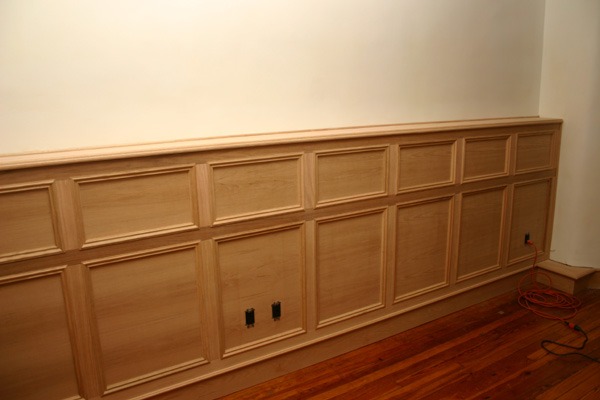
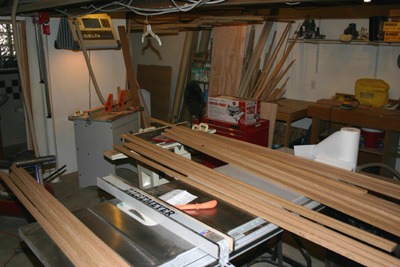
I finished cutting 208 feet of bolection moulding for the wainscotting in the bedroom reno and guess what? I needed 216 feet to complete the job, dammit! I knew I was cutting it close (literally) but I only had a couple of (expensive) red oak 1x8s left which I need for the wainscotting shelf. I’ll dig into my red oak scrap pile and cut the remainder this afternoon. Anyway, I was right. A bolection moulding a/k/a inset panel cap moulding a/k/a rabbeted panel moulding is just an inverted base cap profile with a rabbet. After my router bit quest, I…